Last Updated: June 10, 2026
This comprehensive beginner eye makeup tutorial walks you through every step of applying eye shadow and eye color for a beautifully blended look. Whether you’re completely new to eye makeup or looking to refine your technique, this guide covers lid preparation, color selection, and the essential layering method that professional makeup artists use to create depth and dimension.
I’m going to share with you some tips and tricks on how to add some color into your eye makeup.
How to Prepare Your Eyelids for Eye Shadow Application
So let’s get started. The first thing that you should try is applying concealer foundation or an eye shadow primer on the lids. Not only will this give the eye shadow something to hold on to but it’ll also help to disguise any natural discoloration on the lid which will actually help the color of your eye shadows show up a little bit more and the main parts the eye are the lid area this is what you can see when your eyes are closed the crease area where the lid creases into the eye when the eyes are open and offer refers to any area above this but just stopping underneath the brow bone for color. However I split the lid into three sections an inner corner a middle and an outer corner and we’re going to be using a layering technique to make sure that all three areas are completely colored but still have some light and depth to create any eye makeup look.
We typically use three shadows a shade lighter a shade darker and then a medium shade however for color we use for the color that you’re choosing then one shade lighter than that one shade darker than that and then we have a mid-tone. Typically the mid-tone is the hardest thing to find my personal opinion is to go for a mid-tone that’s very similar to the color that you’re choosing but just a little less saturated in color, or alternatively it can be a lighter version of your contour to start off this look.
According to a 2023 study by NPD Group, eye makeup remains the fastest-growing cosmetics category, with 73% of makeup users reporting that proper lid preparation significantly improves their eye shadow longevity and color payoff.
Applying the Mid-Tone Shade to Your Crease
 I’m going to apply in the mid-tone using a blending brush. Our mid-tone is a Shearer unsaturated version of our color or a lighter version of our contour shade a mid-tone should be matte and you want to apply this deep into the crease of the eye and then very softly blend it upwards. I like to keep my eyes slightly open and just look down in a mirror working the brush over and back and keeping a nice soft application and slowly building it up this will add a soft fade for the color that we’re going to apply onto the lids.
Building Color Intensity on Your Eyelids
I’m going to take a slightly smaller blending brush and use this to apply the color choose any color that you want to and you want to really pack this onto the lids, but you don’t have to use a lot to start with. You can always build this up to make sure you get the intensity that you want. Don’t feel like you have to do the first layer completely perfect it’s a bit like applying nail polish two or three coats is sometimes needed to make sure that color shows up and you want to apply this really close to the lash line working upwards then towards the crease area covering the entire lid make sure as you get to the crease area. There’s not too much on the brush so you get that soft fade now taking a clean blending brush.
Adding Depth with the Contour Shade on the Outer Corner
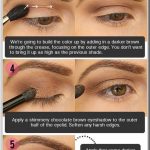
I’m going to apply the contour shade on that outer corner try and keep this just on the outer corner to start with really packing it on the outer third and then very softly sweeping out the edges the reason we cover the entire lid with the color and then layered this over the outer edge is just to make sure that everything works really well together. You’re gonna have a little bit of that color on the lid shining through underneath your contour so it’s a great way to make sure that everything is going to work really well together.
Highlighting the Inner Corner for a Brightened Look
Now taking a flat brush we’re going to apply the lighter highlighter shade in this regard I went for a very pale color with a slight pinky purple undertone. It’s just going to make sure that it works really well with the colors that we’ve already applied we’re going to apply this really close to that tear duct area and then very gently sweep it covering the inner third of the lid and then there you go.
Add some liner lashes and mascara and you’re good to go.
Frequently Asked Questions About Eye Makeup for Beginners
What is the best eye shadow primer for beginners?
For beginners, look for an eye shadow primer that is easy to apply and provides a neutral base. Popular affordable options include concealer or foundation applied to the lids, which helps eye shadow adhere better and last longer throughout the day. Many drugstore brands offer dedicated eye primers that work well for those just starting out.
How do I choose the right eye shadow colors for my eye color?
The best approach for beginners is to start with neutral tones and then experiment with complementary colors. For blue eyes, warm oranges and bronzes create contrast, while purple shades enhance green eyes beautifully. Brown eyes are versatile and can wear almost any color family effectively.
Why does my eye shadow look patchy when I apply it?
Patchy eye shadow usually results from skipping lid preparation or applying too much product at once. Always prime your lids first and build color gradually in thin layers, just like applying nail polish. Using the right brushes—a packing brush for application and a fluffy brush for blending—also makes a significant difference.
What are the three basic eye shadow shades every beginner needs?
Every beginner should have a light shade for highlighting, a medium mid-tone for transition, and a darker shade for adding depth and dimension. The mid-tone should be matte and slightly less saturated than your main color, while the highlight can have a subtle shimmer for the inner corner.
How do I blend eye shadow without making it look muddy?
The key to clean blending is using a light hand and working in small circular motions with a clean, fluffy brush. Always blend your mid-tone shade first before applying color, as this creates a gradient base. Keep your eyes slightly open and look down while blending to see exactly where the crease falls naturally.
Can I use the same brushes for different eye shadow colors?
While you can technically use the same brushes, it’s best to use separate brushes for light and dark shades to avoid muddying your colors. At minimum, keep one brush for applying color, one for blending, and one clean brush for highlighting. Wiping brushes on a clean cloth between colors also helps maintain color integrity.
How long should beginner eye makeup take to apply?
As a beginner, expect your eye makeup routine to take 10-15 minutes as you learn the techniques. With practice, you can achieve a beautiful eye look in just 5-7 minutes. Don’t rush the process initially—taking your time to build layers and blend properly will help you develop muscle memory for faster application later.
📅 Last updated: